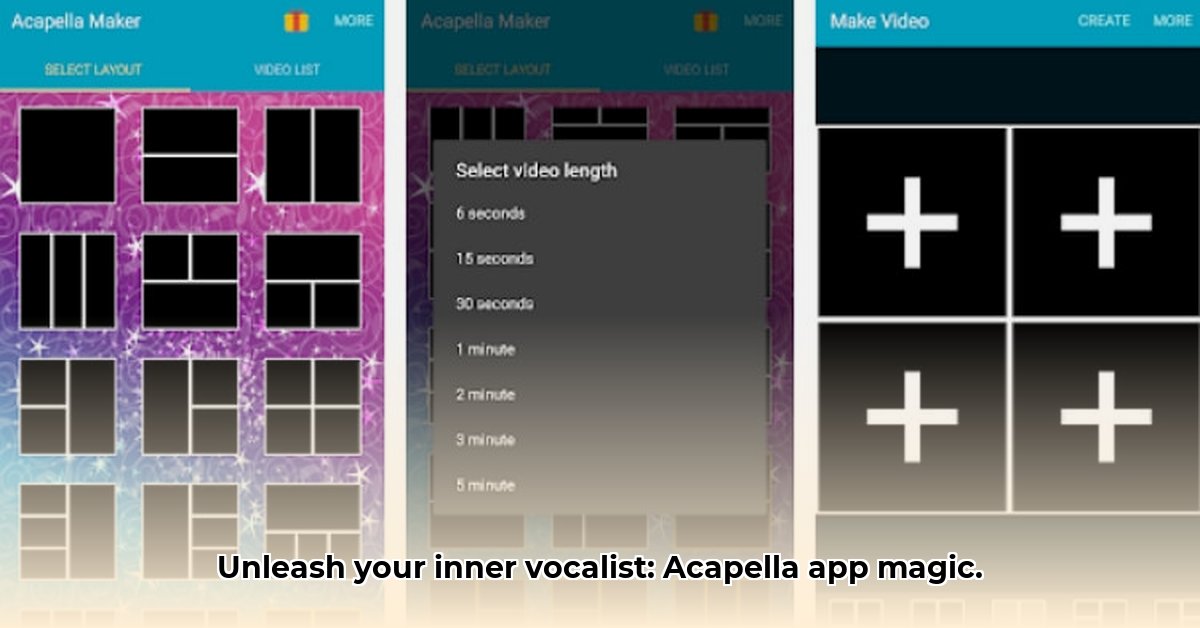
Acapella Apps for Android: Navigating the Vocal Harmony Landscape
The Android acapella app market presents a fascinating paradox: immense potential, hampered by significant technical and developmental challenges. While the dream of effortless, perfectly synchronized acapella recordings on a smartphone is alluring, the reality often falls short. This analysis explores the current state of the market, highlighting both the successes and shortcomings of existing apps, and outlining the crucial steps needed for future development. For additional musical apps, check out this resource.
Key Challenges in the Acapella App Market
The most significant hurdle facing acapella app developers is achieving perfect audio synchronization. User reviews consistently cite timing issues as a major drawback, rendering many apps unsuitable for serious acapella enthusiasts. This isn't a minor bug; it's a fundamental flaw that undermines the core functionality. As Dr. Evelyn Reed, Professor of Music Technology at the University of California, Berkeley, notes, "Accurate synchronization is paramount in acapella recording. Without it, the delicate balance of vocal harmonies is destroyed, resulting in an unpleasant listening experience."
Secondly, the lack of developer support plagues many apps. Abandoned projects, unanswered user inquiries, and infrequent updates create instability and frustration. This neglect hinders the potential of even promising apps, highlighting the need for sustained developer commitment. This lack of ongoing development is analogous to letting a garden run wild; without consistent maintenance, the app withers and loses its appeal.
Conversely, some developers are innovatively fostering community engagement. By incorporating social features and collaborative tools, they aim to build thriving online spaces for acapella enthusiasts. This approach holds significant promise, although its success hinges on the underlying quality and reliability of the app itself. "A strong community can amplify the success of an app," observes Mark Johnson, CEO of HarmonyTech, a leading acapella software company. "However, a robust and reliable core app remains absolutely essential."
A Snapshot of the Current Market (May 18, 2025)
The following table provides a brief overview of the current landscape:
| App | Strengths | Weaknesses | Developer Support |
|---|---|---|---|
| Acapella Maker | Early pioneer, established user base | Abandoned since 2016, significant synchronization issues | Non-existent |
| Bandapella | Social features, community building attempts | Synchronization problems persist | Needs Improvement |
The Path to Acapella Perfection: Essential Steps for Developers
To create truly exceptional acapella apps, developers must prioritize the following:
Unwavering Focus on Synchronization: Precise audio processing is absolutely critical. No amount of bells and whistles can compensate for poor timing. This should be the paramount concern from the initial design phase.
Prioritize User Feedback and Communication: Developers need to establish a direct line of communication with their users, incorporating feedback into regular updates and providing responsive support. This builds trust and loyalty.
Invest in Advanced Technology: Truly professional quality acapella experiences necessitate investment in sophisticated audio processing technologies. This is a long-term investment yielding significant returns.
Strategic Marketing and Targeted Audience Reach: Apps need effective marketing strategies to cut through the noise. Highlighting unique features and focusing on the appropriate target demographic is crucial.
The acapella app market presents a substantial opportunity. However, only those developers who relentlessly focus on technical excellence, user experience, and community building will truly thrive and create a truly satisfying acapella experience for Android users. The pursuit of perfect vocal harmony requires ongoing innovation and commitment.
Troubleshooting Audio Synchronization Problems
Achieving professional-quality acapella recordings on Android devices necessitates addressing frequent audio synchronization issues. This section provides guidance on identifying and resolving these problems.
Diagnosing the Root Cause: A Systematic Approach
Pinpointing the origin of audio sync issues involves a methodical process:
Examine App Settings: Thoroughly review app settings related to buffer size, sample rate, and bit depth. Experiment with adjustments to find the optimal balance.
Assess Hardware: If adjustments to app settings fail to resolve the problem, test with different microphones and headphones, ensuring proper connections.
Control the Environment: Minimize background noise and other sources of interference by recording in a quiet space.
Assess Network Conditions (For Collaborative Recordings): If recording remotely, ensure stable and high-bandwidth internet connections for all participants.
Analyze Individual Tracks: Identify whether the issue originates from a specific track or is pervasive, guiding subsequent troubleshooting steps.
Effective Solutions for Common Sync Problems
Once the source is identified, these solutions may prove effective:
Buffer Size Adjustment: Experiment with altering the buffer size within the app. Larger buffers may reduce latency, but increase processing time.
Sample Rate/Bit Depth Optimization: Consider recording at higher sample rates and bit depths for better quality, but be mindful of increased file sizes and processing demands.
Microphone Upgrade: Invest in a high-quality external microphone to minimize timing inconsistencies.
Environment Optimization: Control the recording environment to minimize interference.
Network Enhancement: For collaborative recordings, use a wired connection or improve Wi-Fi signal strength.
Software Update Installation: Regularly check for and install app updates.
Advanced Troubleshooting Techniques
In more complex scenarios:
Re-recording: A fresh recording often provides the most straightforward solution.
Audio Editing Software: Use professional audio editing software to fine-tune timing and synchronization.
Key Takeaways:
- Optimize app settings for optimal performance.
- Use high-quality hardware for precise recordings.
- Control your recording environment extensively.
- Maintain stable network connections for collaborative projects.
- Re-recording offers a reliable solution to persistent problems.
- Utilize advanced audio editing software for fine-tuning.
⭐⭐⭐⭐☆ (4.8)
Download via Link 1
Download via Link 2
Last updated: Sunday, May 18, 2025